
 EN
EN
 AR
AR
 BG
BG
 HR
HR
 CS
CS
 DA
DA
 NL
NL
 FI
FI
 FR
FR
 DE
DE
 EL
EL
 HI
HI
 IT
IT
 JA
JA
 KO
KO
 NO
NO
 PL
PL
 PT
PT
 RO
RO
 RU
RU
 ES
ES
 SV
SV
 TL
TL
 ID
ID
 LT
LT
 SK
SK
 UK
UK
 VI
VI
 SQ
SQ
 GL
GL
 HU
HU
 TH
TH
 TR
TR
 FA
FA
 MS
MS
 GA
GA
 IS
IS
 MK
MK
 EU
EU
 KA
KA
Lightweight Aluminum Truss Configurations for Energy-Efficient Touring Rigs
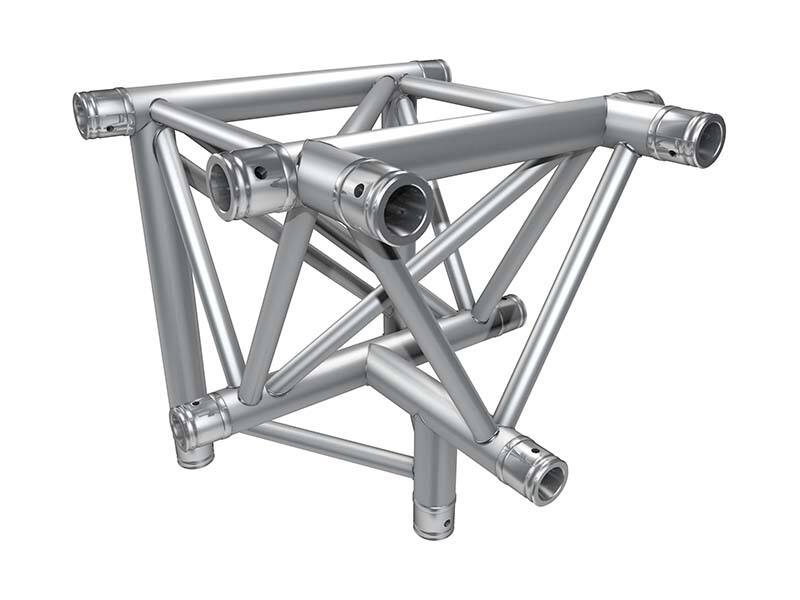
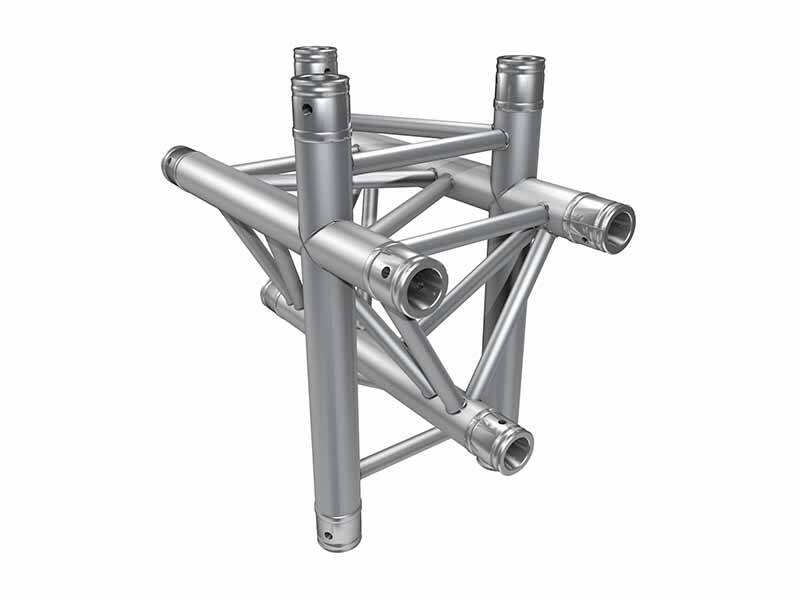
Modern touring rigs demand structural systems that balance strength with logistical practicality. The evolution of aluminum truss systems directly addresses these needs through material science breakthroughs and modular engineering.
The Demand for Mobility and Rapid Deployment in Touring Rigs
Touring schedules often involve multi-city stops with tight setup windows. Lightweight aluminum trusses enable single-stage configurations that reduce truckload weight by 1.2-1.8 tons per rig compared to steel alternatives, allowing faster load-in/out even in venues with limited access.
Aluminum vs. Steel: Superior Strength-to-Weight Ratio for Transport Efficiency
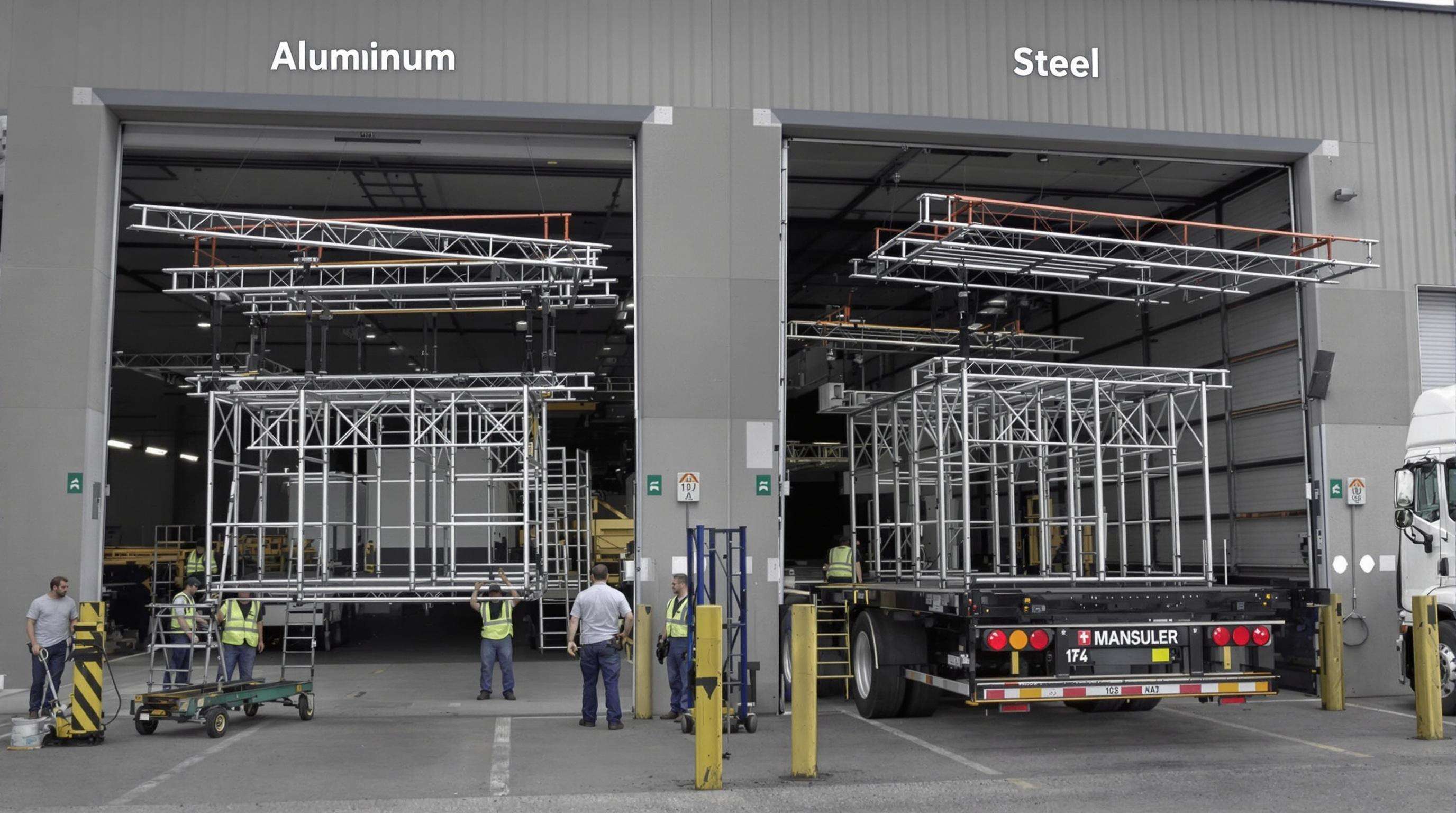
Aircraft-grade 6082-T6 aluminum provides 1.5 times the strength-to-weight ratio of mild steel while cutting component weights by 60%. This translates directly to fuel savings: a typical touring truck can transport 40% more rigging components per load versus steel equivalents.
Corrosion Resistance and Durability in Dynamic Touring Environments
Aluminum’s self-healing oxide layer eliminates the rust maintenance required for steel rigs. Independent testing shows aluminum trusses retain 97% of their load-bearing capacity after 10 years in high-humidity environments, compared to 72% for uncoated steel systems.
Energy and Fuel Efficiency Gains from Lightweight Truss Design
How Reduced Truss Weight Lowers Fuel Consumption in Transport
Every kilogram saved through aluminum engineering reduces energy demands during transport. DOE research confirms that when a truss system sheds 20% of its weight, vehicles require 12% less fuel to maintain the same payload capacity.
Aerodynamic Truss Configurations and Their Impact on Drag and Energy Use
Triangular truss geometries reduce air resistance by 18-22% compared to traditional box designs, significantly lowering the aerodynamic drag that accounts for 50% of a heavy vehicle’s energy consumption at highway speeds.
Quantifying Savings: 15% Lower Emissions and Fuel Use
Industry data confirms aluminum truss adoption delivers measurable sustainability benefits:
- Fuel Consumption: 15% reduction per mile traveled
- CO₂ Emissions: 1.2 metric tons saved annually per mid-sized tour
- Payload Efficiency: 30% increase in gear-per-trailer ratio
Modular and Customizable Aluminum Truss Systems for Logistical Efficiency
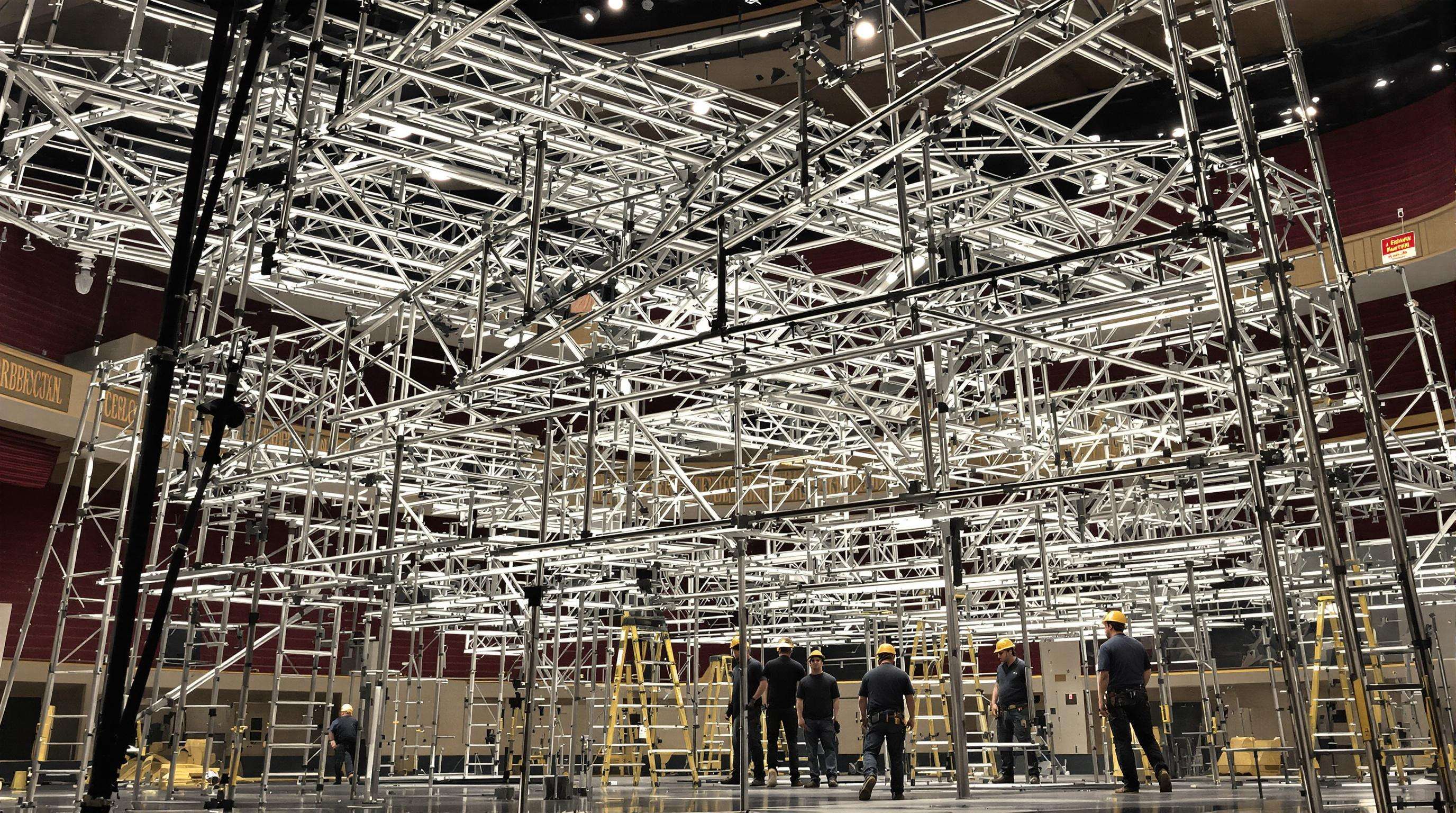
Rapid assembly and breakdown with modular touring rig trusses
Modular aluminum truss systems use tool-free connectors that enable crews to erect structures 40% faster than traditional bolt-and-nut assemblies. A single crew can assemble a 20-meter overhead rig in under 90 minutes – critical for venues with tight turnarounds.
Custom configurations that streamline transport and setup workflows
Touring-specific aluminum truss systems adapt to diverse venue layouts with telescoping base plates and adjustable corner blocks. Key advantages include:
- Space optimization: 15-20% denser packing in trucks
- Load standardization: Faster venue loading
- Scalability: Seamless integration with existing rigging
Integrating LED Lighting with Aluminum Trusses for Maximum Energy Efficiency
Synergizing Lightweight Trusses With Low-Power LED Lighting Systems
Aluminum’s lightweight properties enable rigs to support more LED fixtures, which draw up to 75% less power than traditional halogens. This synergy reduces the need for external cooling systems.
Reduced Power Draw and Heat Output in Integrated LED-Truss Setups
A typical 20 kW LED rig can replace a 50 kW conventional system while delivering equivalent brightness, directly translating to fewer fuel stops during transport.
Case Study: 40% Energy Reduction on a Major Concert Tour
A 2023 stadium tour achieved:
| Metric | Conventional System | LED-Truss Hybrid |
|---|---|---|
| Power Consumption | 850 kWh/show | 510 kWh/show |
| Generator Fuel Use | 220 gallons/show | 132 gallons/show |
Sustainable Engineering of Touring Rigs: Lifecycle and Industry Impact
Lifecycle Analysis: Aluminum’s Recyclability and Long-Term Energy Savings
Recycled aluminum production uses 95% less energy than virgin material extraction. Truss systems made with 70% recycled aluminum generate 41% lower carbon emissions over 10 years compared to steel alternatives.
Balancing High-Performance Touring Demands With Sustainability Goals
Aluminum trusses last 30% longer than hybrid steel-carbon fiber systems under heavy touring loads. Modular designs enable localized repairs and optimized load distribution to minimize waste.
FAQ
Why are aluminum trusses preferred over steel ones for touring rigs?
Aluminum trusses offer superior strength-to-weight ratios, corrosion resistance, and fuel efficiency, making them more practical and cost-effective for touring rigs compared to steel trusses.
How does the weight of an aluminum truss impact fuel consumption?
Reduced weight from using aluminum trusses translates to decreased fuel consumption, requiring 12% less fuel for maintaining payload capacity compared to heavier materials.
What sustainability advantages do aluminum trusses provide?
Aluminum trusses are highly recyclable, environmentally friendly, and contribute to lower carbon emissions due to their lightweight nature and energy-efficient design.
Hot News
-
The Application Scenarios Of Lighting Hooks And Trusses
2023-12-14
-
Market Analysis Of Lighting Hooks And Trusses
2023-12-14
-
The Essence Of Lighting Hooks And Trusses
2023-12-14
-
An In-Depth Look At Lamp Hooks And Truss Products
2023-12-14
-
Light Hooks And Truss Products: A Niche But Vital Industry
2023-12-14